Ford automates water shield installation on a moving EV assembly line with Inbolt
Customer: Ford Motor Company
Location: Cologne, Germany
Application: Water shield rolling on a moving line
At Ford’s Cologne Electric Vehicle Center, applying pressure to water shields on a moving vehicle line was a manual process that occasionally led to sealing issues detected during final water testing. By deploying two Universal Robots equipped with Inbolt’s intelligent 3D vision guidance, Ford automated the operation directly on the moving assembly line. The system tracks each vehicle in real time and guides the robots along a complex path, delivering stable automation and near-zero repairs per thousand vehicles.
The challenge
Ford needed to automate a water shield installation process on a continuously moving assembly line.
The task required applying pressure along a complex path across the vehicle body while the car moves down the production line. This created several technical constraints:
-
The vehicles move continuously, requiring real-time tracking.
-
The station must follow a precise path on the vehicle body.
-
The vehicles are carried on hanging carriers that are mechanically independent.
Because the carriers are not mechanically synchronized, traditional encoder-based automation could not reliably track vehicle movement.
Ford needed a solution capable of dynamically detecting each vehicle’s position and guiding the robot accordingly.
The Solution
Ford implemented two Universal Robots cobots equipped with Inbolt’s robot-mounted 3D cameras, deployed by NUTAI, a systems integrator specialized in the design and installation of industrial automation systems.
The robots are positioned on both sides of the line and operate in parallel to apply pressure to the water shields as vehicles move through the station.
Using real-time 3D vision, the system continuously detects the vehicle’s position and updates the robot trajectory during execution. Instead of relying on encoders or rigid synchronization, the robots adapt their motion dynamically to the actual position of the vehicle.
This approach allows the operation to run directly on the moving assembly line without indexing systems, additional fixtures, or mechanical synchronization.
Success Metrics
-
Near-zero repairs per thousand vehicles during final water testing
-
Stable vision-guided automation with virtually no system malfunctions
-
Full automation on a continuously moving assembly line
-
No encoders or mechanical synchronization required
Following the success of the project, Ford is now exploring additional applications enabled by real-time vision guidance, including tightening operations performed directly on the moving production line without adding new automation cells.
“We are very happy with the automation. We’ve seen nearly no malfunctions and our results in the water tests are very good. Repairs per thousand have gone close to zero.”
Steffen Münch
Automation Engineer, Ford Cologne Electric Vehicle Center
Explore more from Inbolt
Access similar articles, use cases, and resources to see how Inbolt drives intelligent automation worldwide.
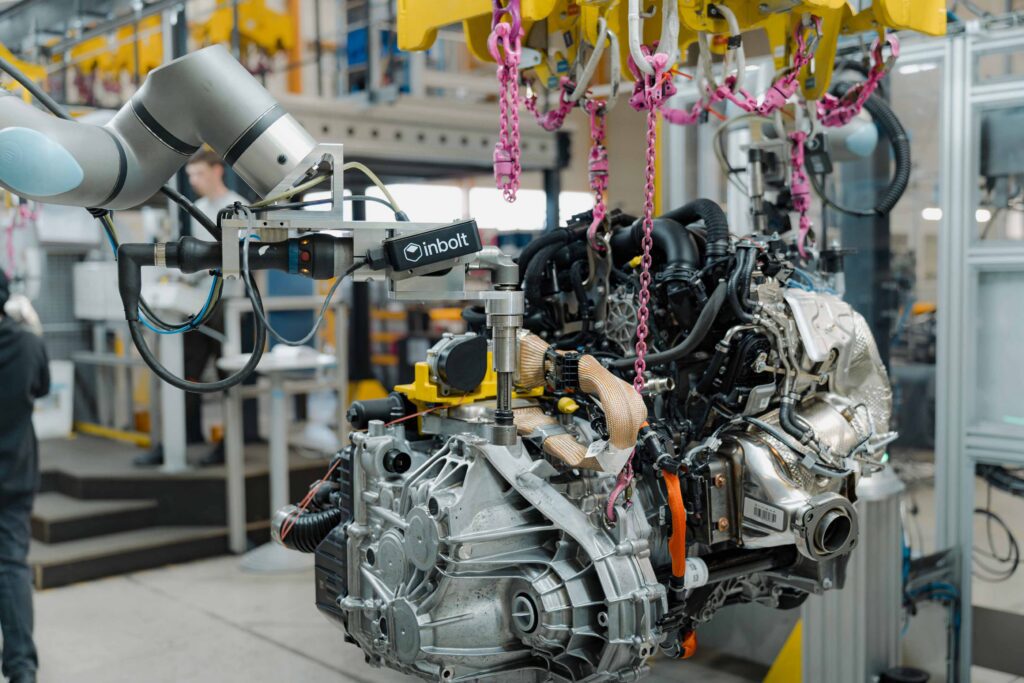
A first-of-its-kind deployment: How thyssenkrupp automated a non-stop Mercedes engine line
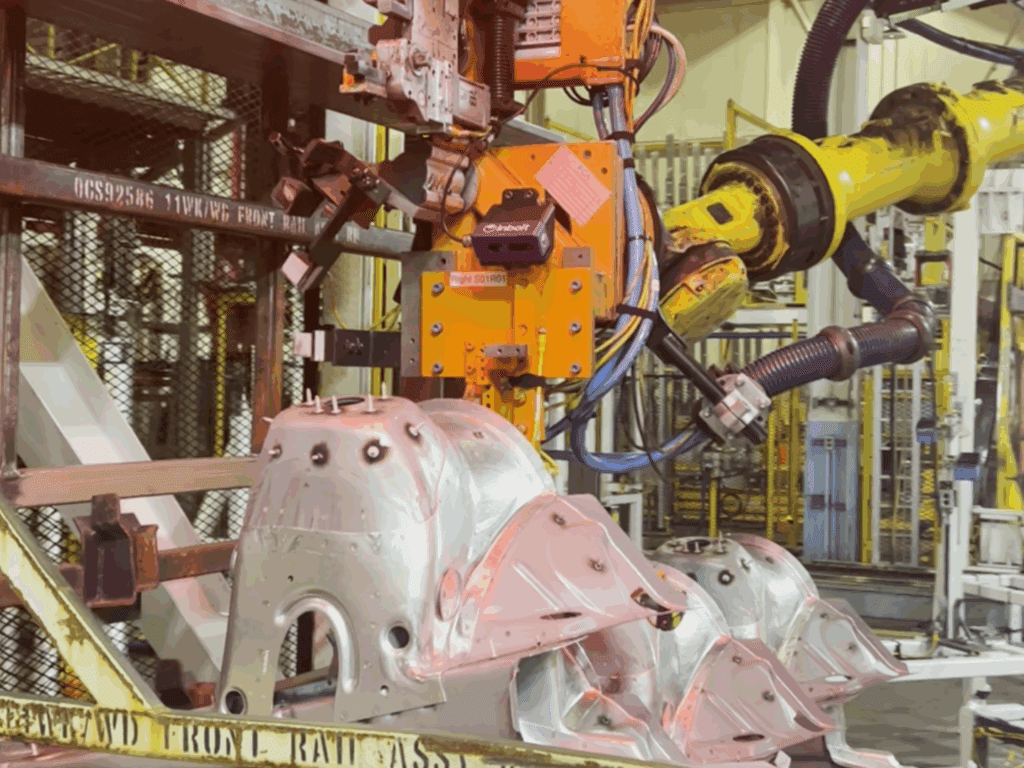
Automotive OEM enhances automation performance by leveraging Inbolt’s intelligent vision and organizational capabilities
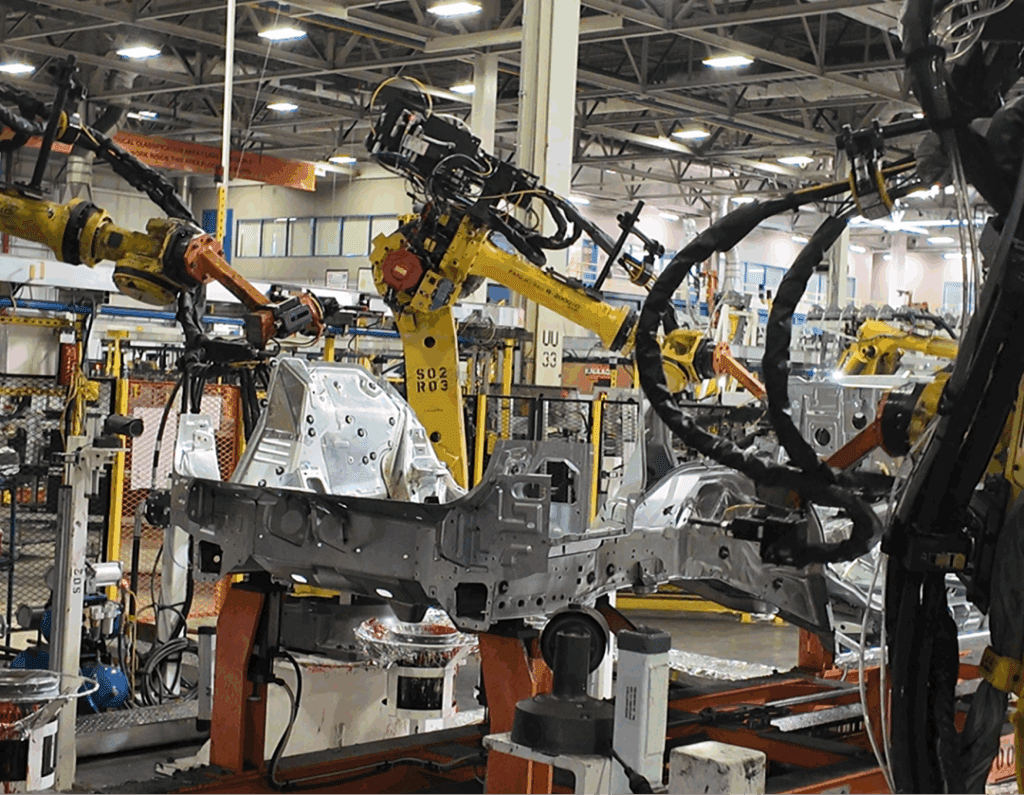
70% improvement in cycle efficiency for glue dispensing
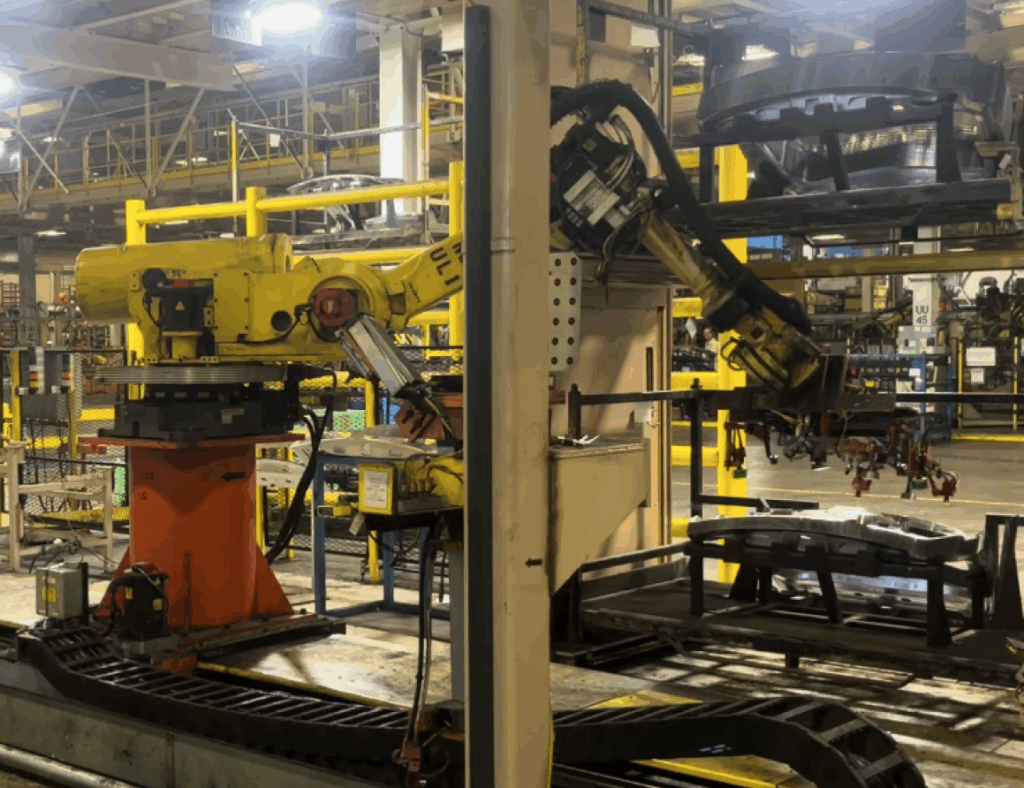
30% Cycle Time Reduction in Automotive Pick & Place
Stellantis Reduces Tightening Rejects by 91% with Inbolt’s Vision-Guidance at their Trenton Plant
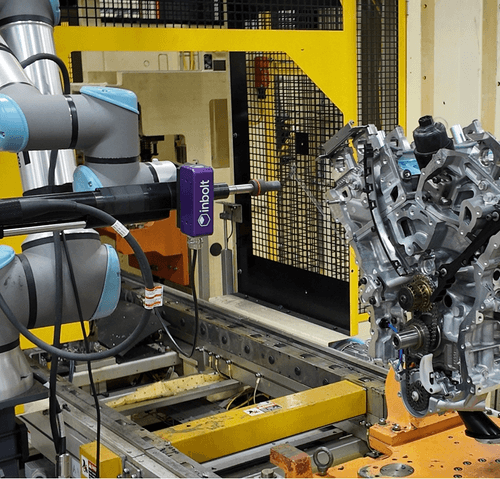
Stellantis Valenciennes Cuts 2.7 Tons in Daily Handling with Inbolt’s Vision-Guided Automation
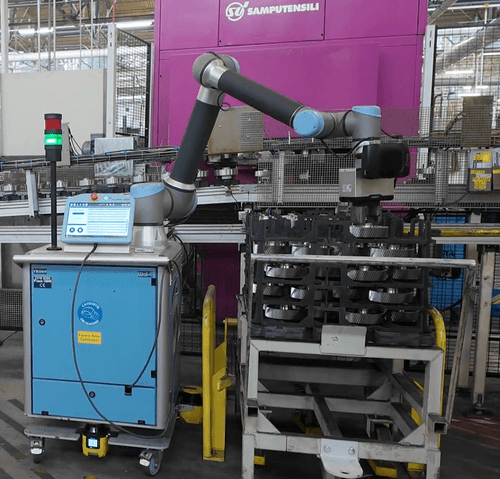
Stellantis Enhances Bodyshop Efficiency by 97% with Inbolt’s Vision-Guided De-Racking Solution