Robotic maintenance across your data centers
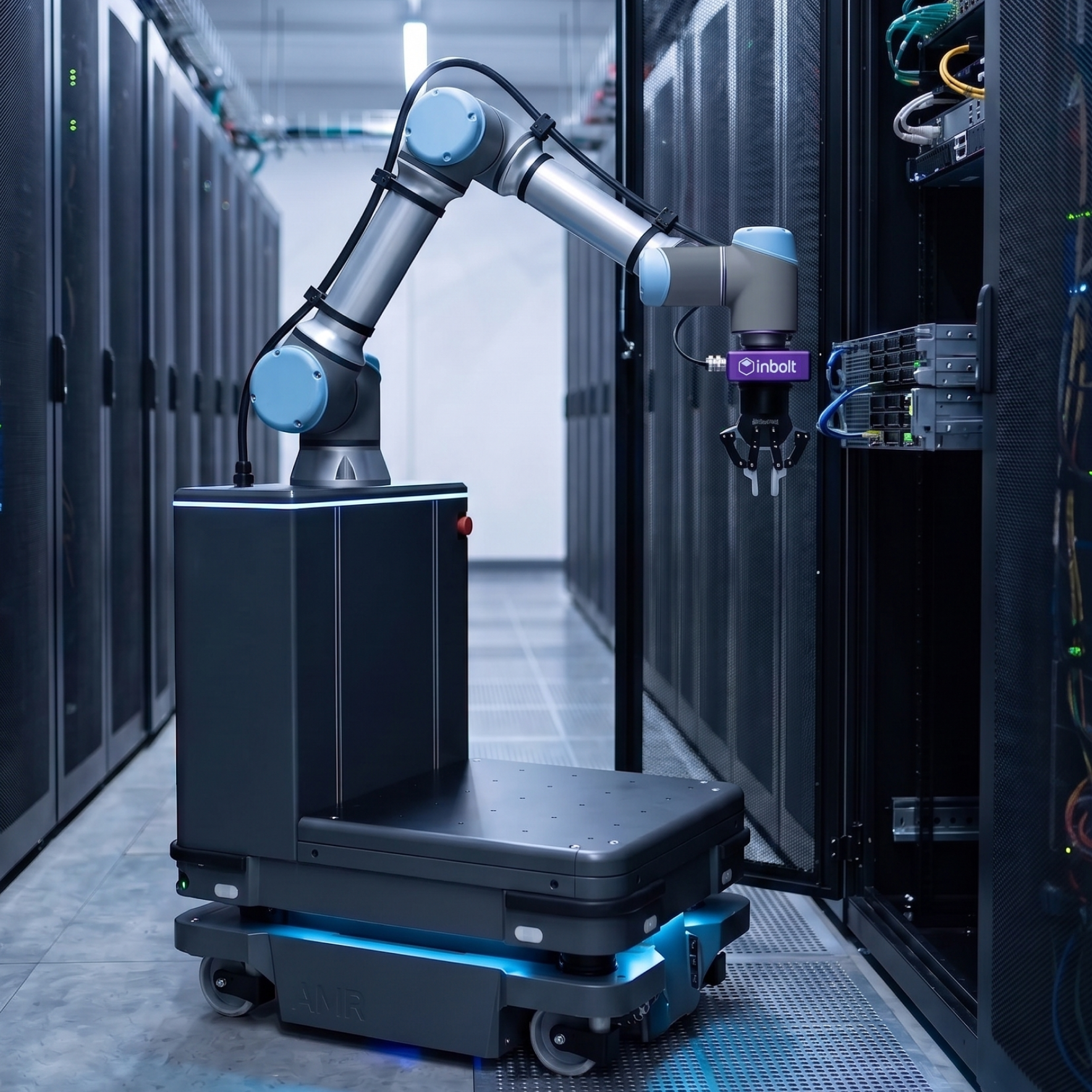
Inbolt runs the mobile base, the arm and the vision in one control loop, so a robot that’s centimeters off its docking point still hits a server rack, transceiver or interface point to a fraction of a millimeter. No fiducials or rack changes needed. Connected to your existing DCIM software.

How Inbolt enhances maintenance operations
One camera, one controller, and a vision model trained on your parts’ CAD.

One control loop, not three separate systems
Inbolt Robot Control commands the mobile base and the arm together, with the vision model in the same loop — not a camera that hands a waypoint to somebody else’s controller.

Built for direct integration
Inbolt integrates natively with Open-RMF, allowing your existing DCIM software to dispatch tasks directly to the robot and coordinate multi-vendor fleets. No extra hardware or software overhauls required.

Everything stays on premise
Both training and inference run locally on Inbolt’s onboard hardware. Zero cloud dependencies, zero external network requirement. Fully tailored for air-gapped and high-security facilities.
Proven impact, measurable results
5
< 5 min
CAD training time
0.1
± 0.1 mm
Localization accuracy
100
100 +
Sites using Inbolt
24
24 / 7
Operational availability
Automation for the Infrastructure You Already Have
A data center’s revenue is directly tied to its uptime. Unscheduled downtime impacts the bottom line, making fast, zero-error maintenance critical to preserving operational continuity.
To automate these routine servicing tasks, the industry’s usual answer has been extensive infrastructure redesign, requiring cable-less racks, QR codes, optical targets, and standardized builds. But retrofitting an operational facility means taking aisles offline, creating the very downtime automation was meant to prevent.
That leaves the vast majority of installed bases, including mixed colocation sites and legacy racks, completely untouched. Inbolt’s approach is the opposite: make the robot adapt to your existing racks instead of redesigning your facilities for the robot.
Autonomous navigation can reliably bring a mobile platform to the right aisle and rack. What the base cannot do on its own is align a tool or sensor with a specific drive bay or transceiver, because docking repeatability is measured in centimeters while physical servicing requires sub-millimeter precision. Inbolt bridges that gap. By dynamically guiding the arm to correct for real-world docking variance, high-precision tasks become possible without altering a single piece of server hardware.
How it works
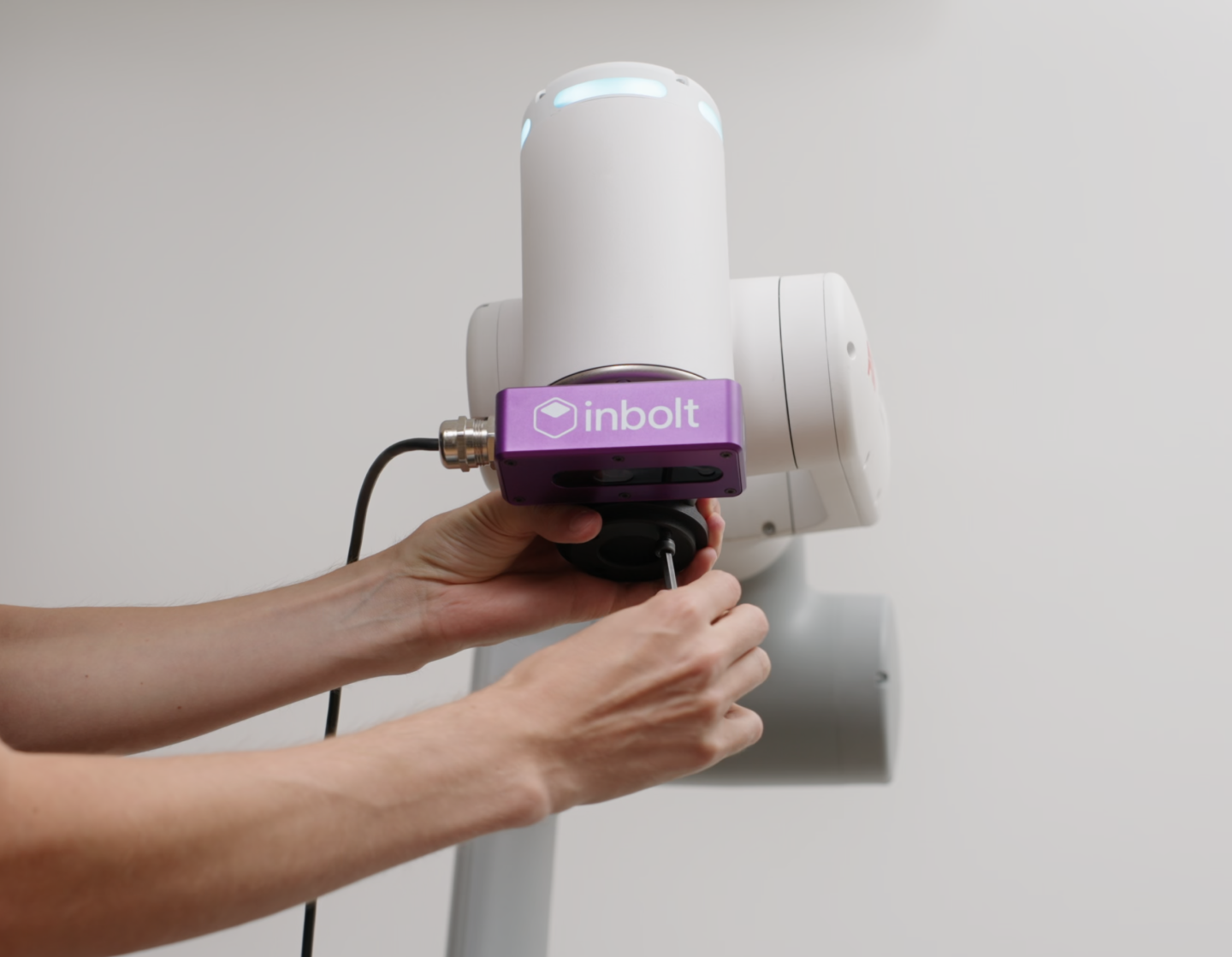
Step 1 – Mount & connect
Vision and control run locally on the mobile manipulator, while Open-RMF integration connects it to your existing DCIM and fleet management software.
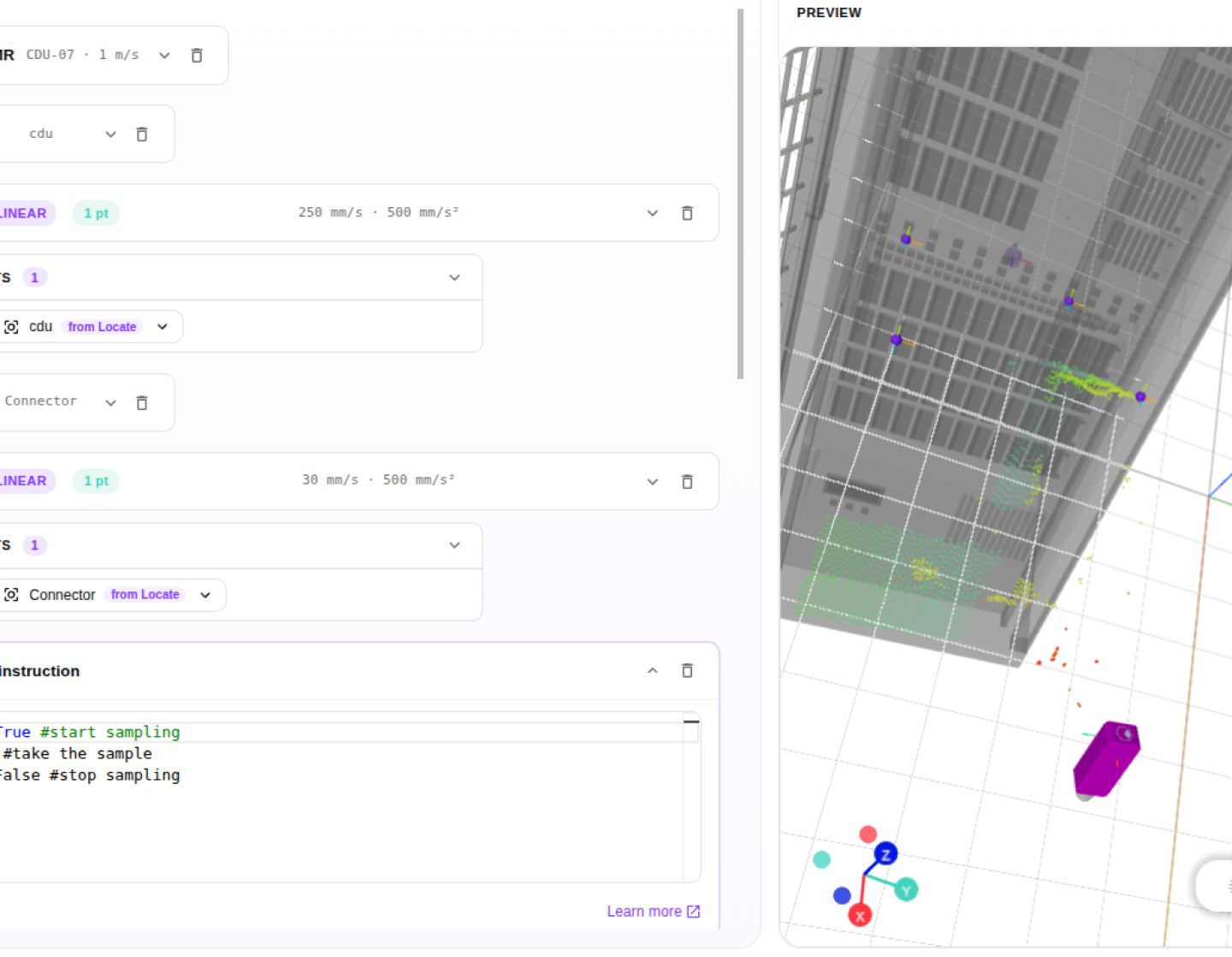
Step 2 – Train from CAD
Upload the rack and component models, train on site in minutes. No fiducials, no brackets, no changes to the hall.
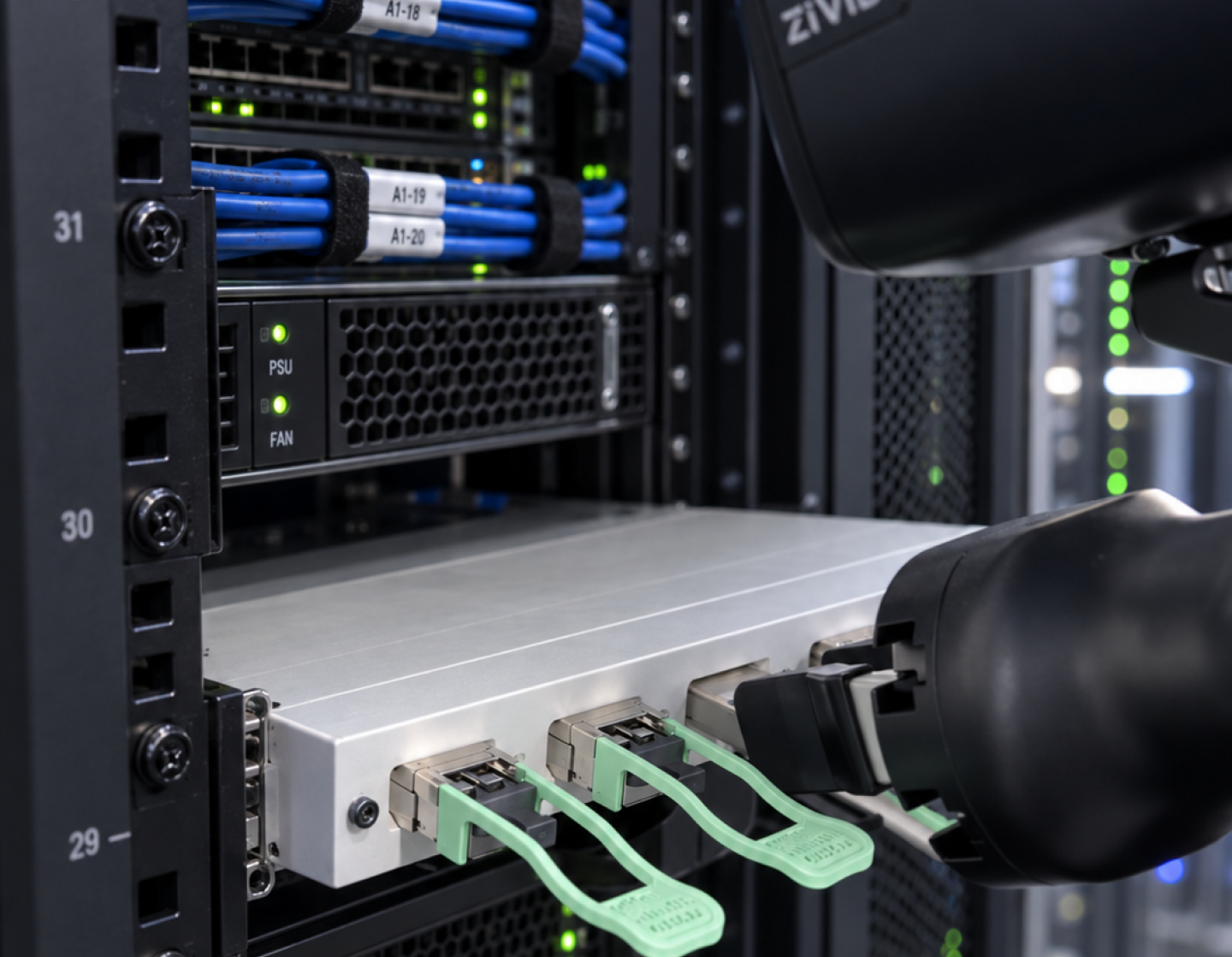
Step 3 – Run
The robot navigates to the rack, and the arm locates and corrects to the exact target — drive bay, transceiver, connector — regardless of where the base actually stopped.
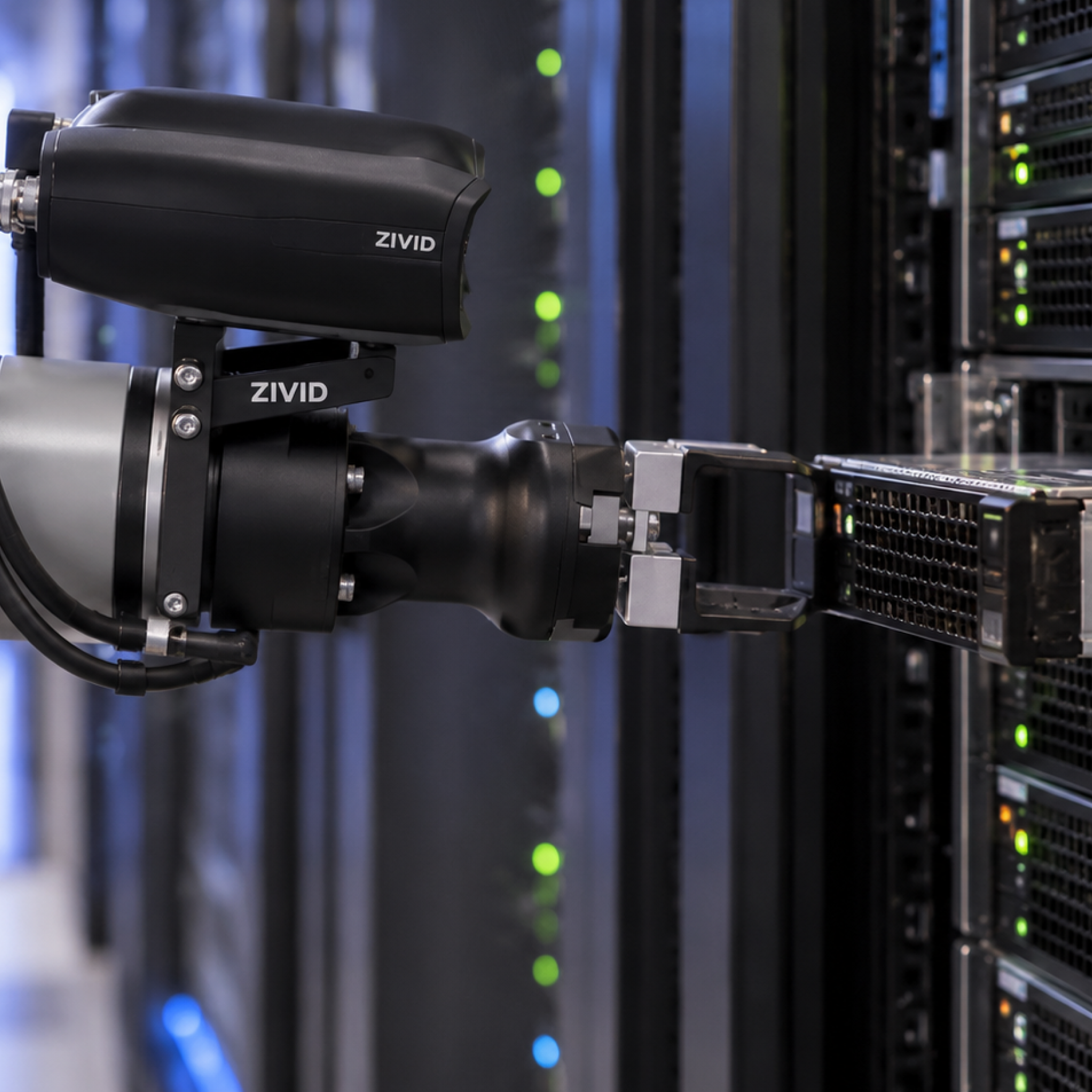
What Inbolt adds to your operations
From module swap to fluid sampling, one robot runs your full maintenance stack.
Drive & module swap
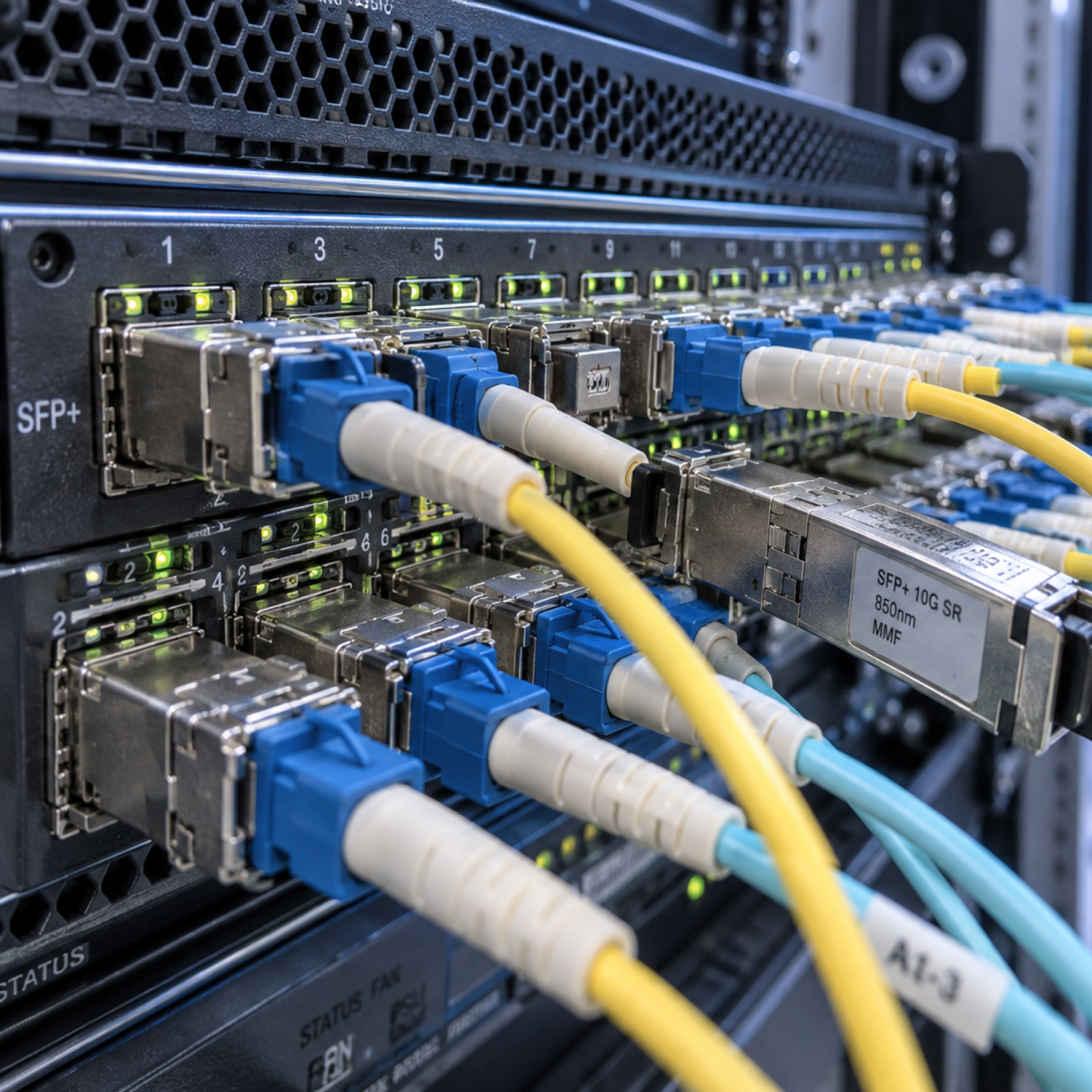
Transceiver & cable handling
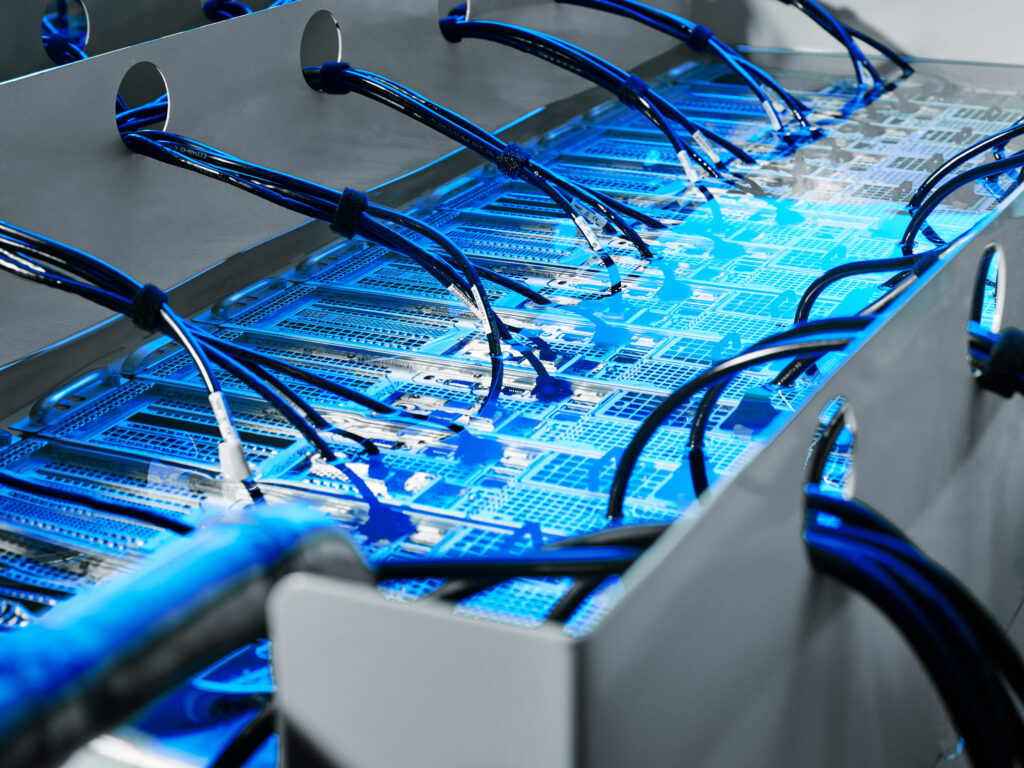
Coolant & fluid sampling
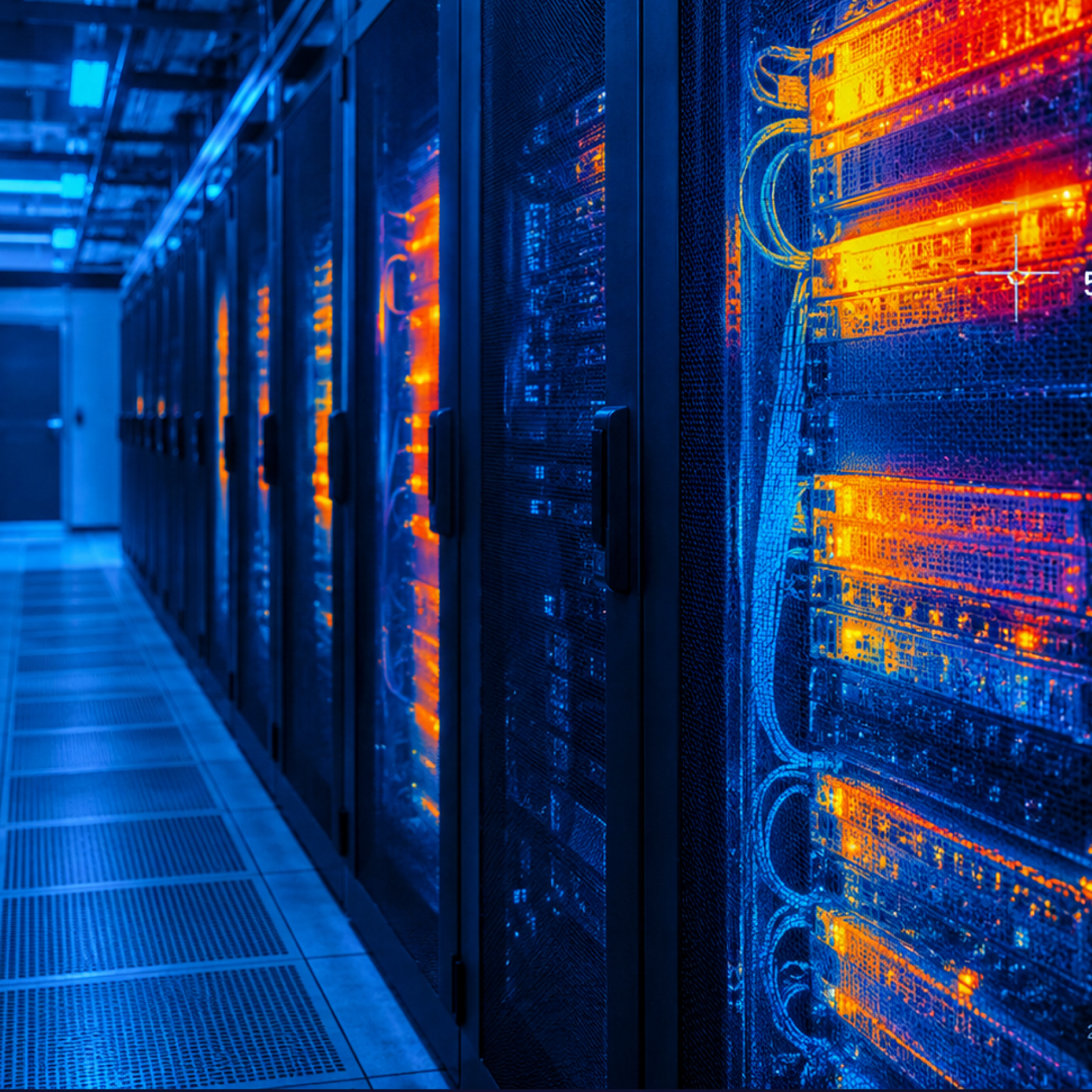
Thermal inspection
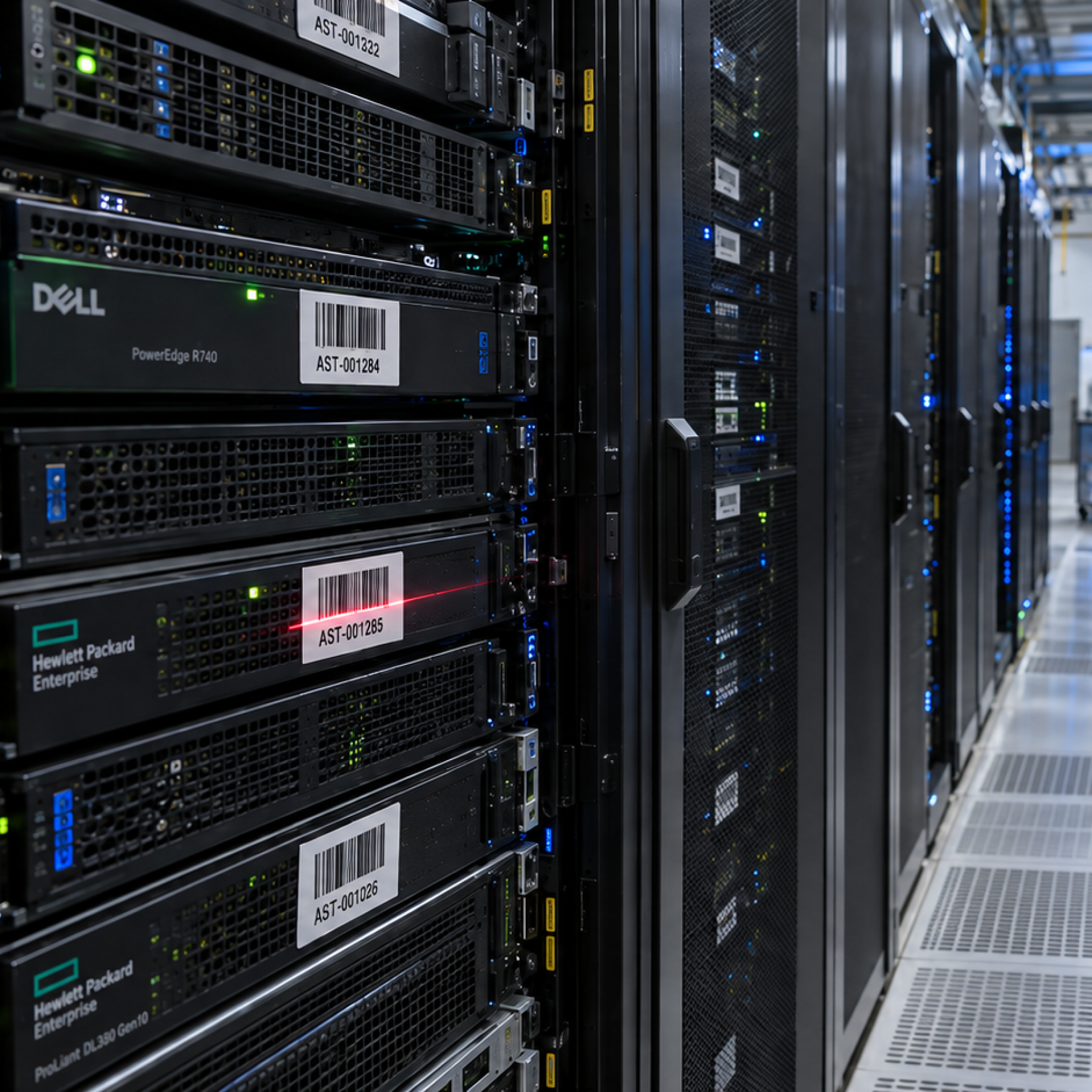
Inventory & asset audit
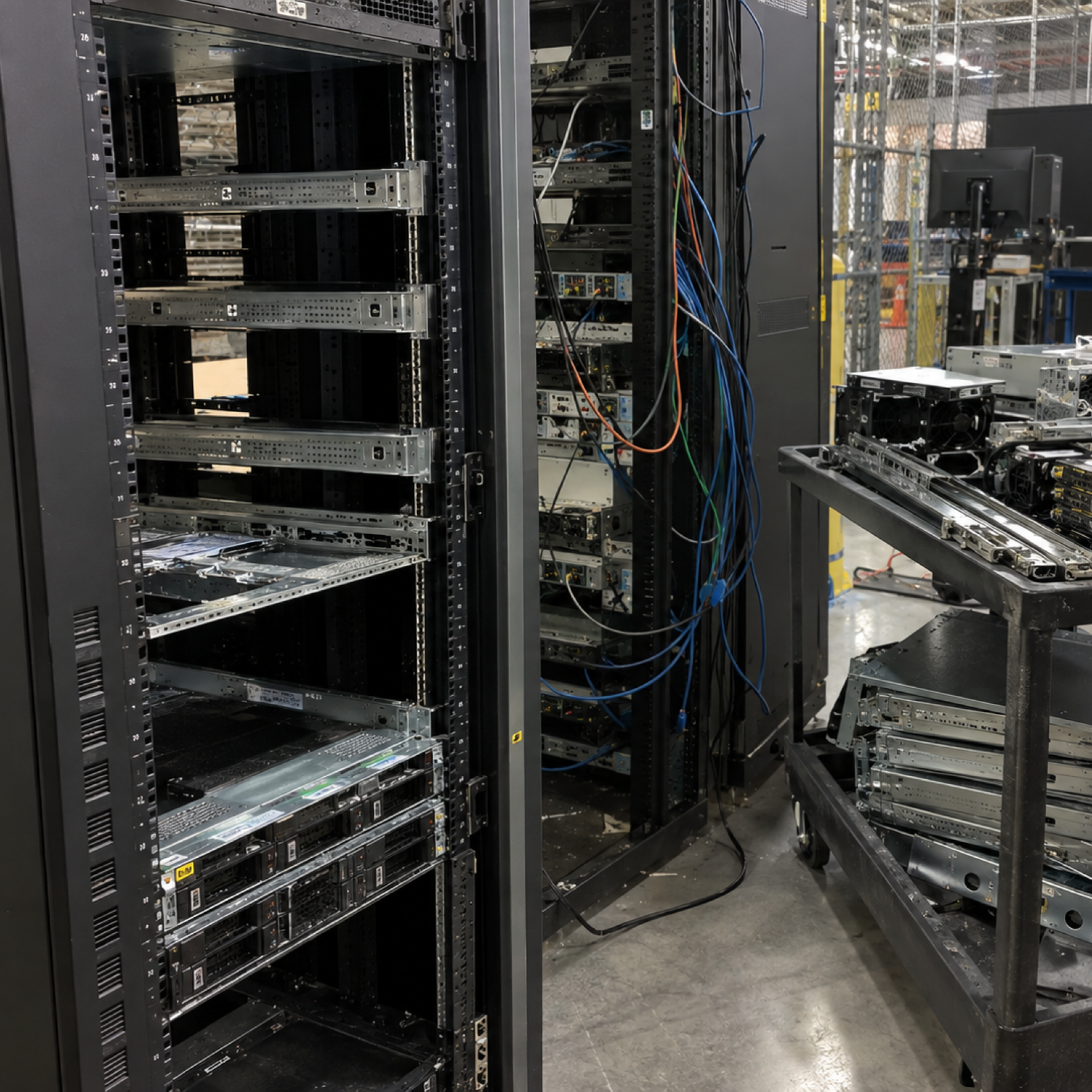
Decommissioning & teardown
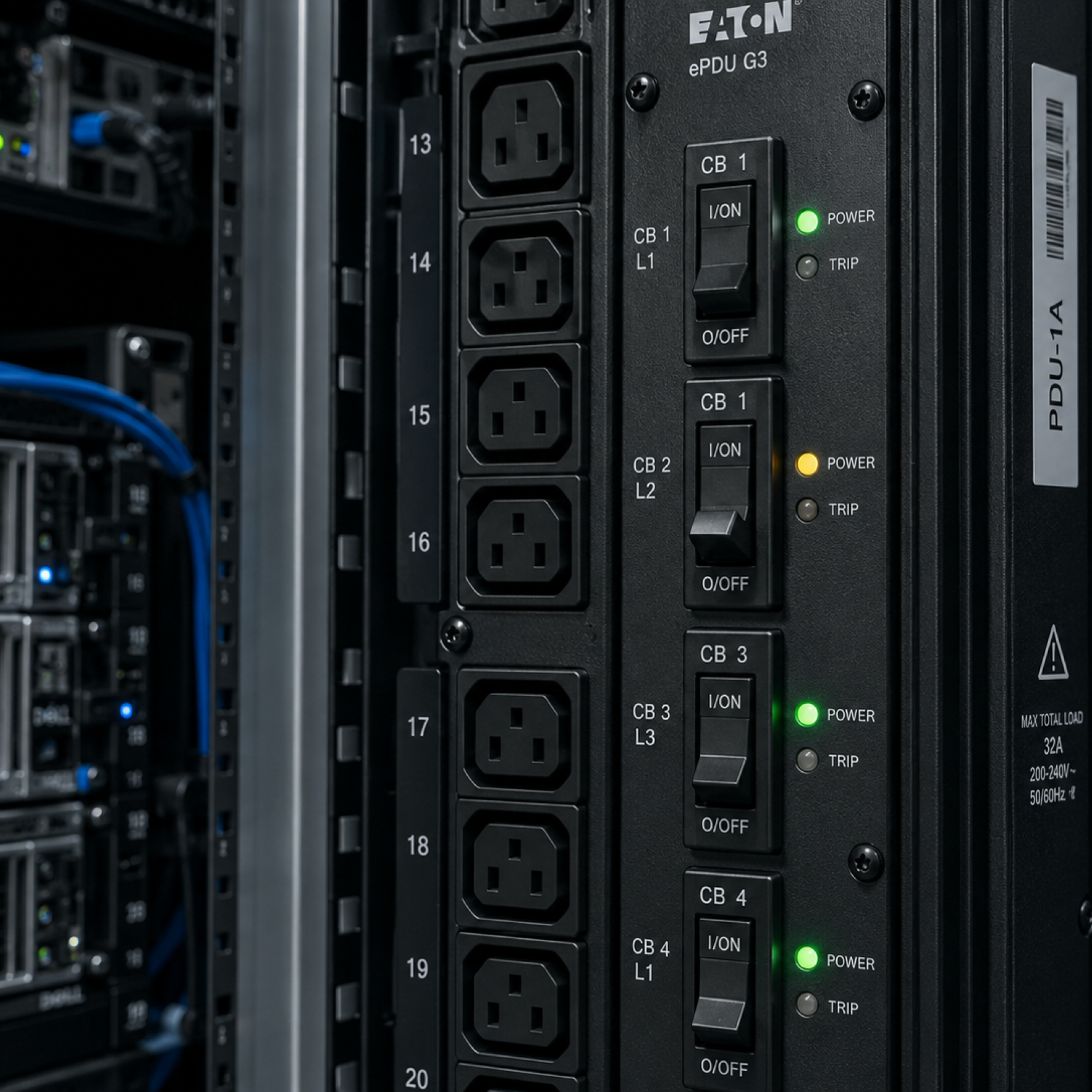
Physical resets
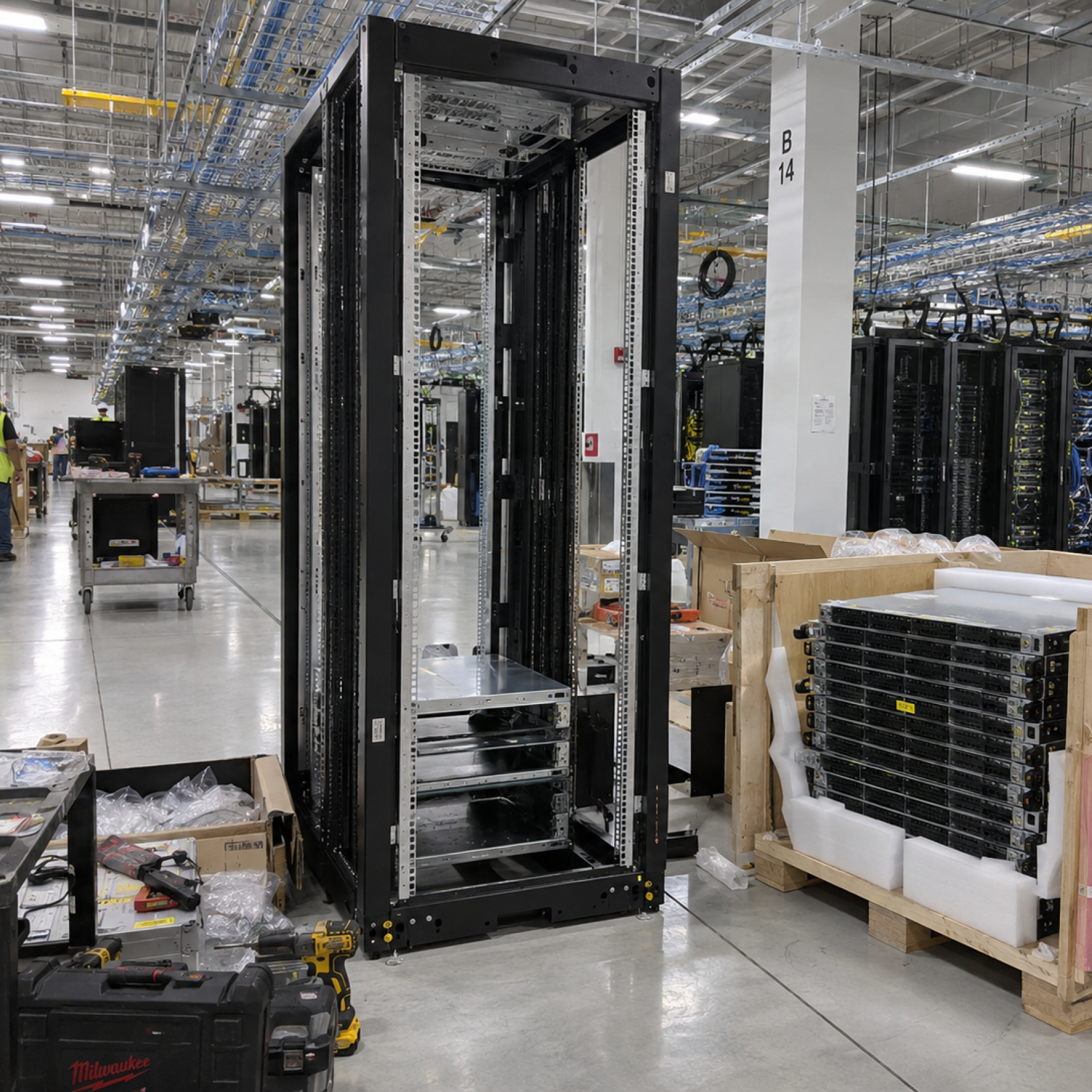
Rack & module handling
FAQ
Answers to common questions about Inbolt’s data center maintenance solution.

-
No. Open-RMF connects Inbolt to your existing fleet management system and handles traffic scheduling across all fleets on your floor, while real-time telemetry flows straight back to your central dashboard.
-
Inbolt matches CAD to what’s actually in front of the camera, not to a fiducial or bracket you’d need to install. Non-standard racks are the normal case, not the edge case.
-
Everything runs on premise — no cloud, no internet dependency. Remote access, if you want it at all, is time-bounded and auditable through your own gateway.
-
The category is real and moving — public examples include autonomous disk replacement at scale, decommissioning robots, and rack-servicing trials discussed openly at OCP. What’s been missing is a control platform that can run precise manipulation on top of navigation. That’s the part Inbolt provides.
-
No. Inbolt is vendor-agnostic. The vision and control software runs on top of ROS 2, allowing it to integrate with any AMR base and robot arm.
-
No. Inbolt uses real-time 3D vision and CAD matching to guide the arm, eliminating the need to modify racks, add fiducials, or install floor markers.
Put the last few millimetres on autopilot
Tell us what’s blocking robotic servicing in your halls today. We’ll tell you honestly what’s solvable now and what isn’t yet.

Explore more from Inbolt
Access articles, use cases, and resources to see how Inbolt drives intelligent automation worldwide.
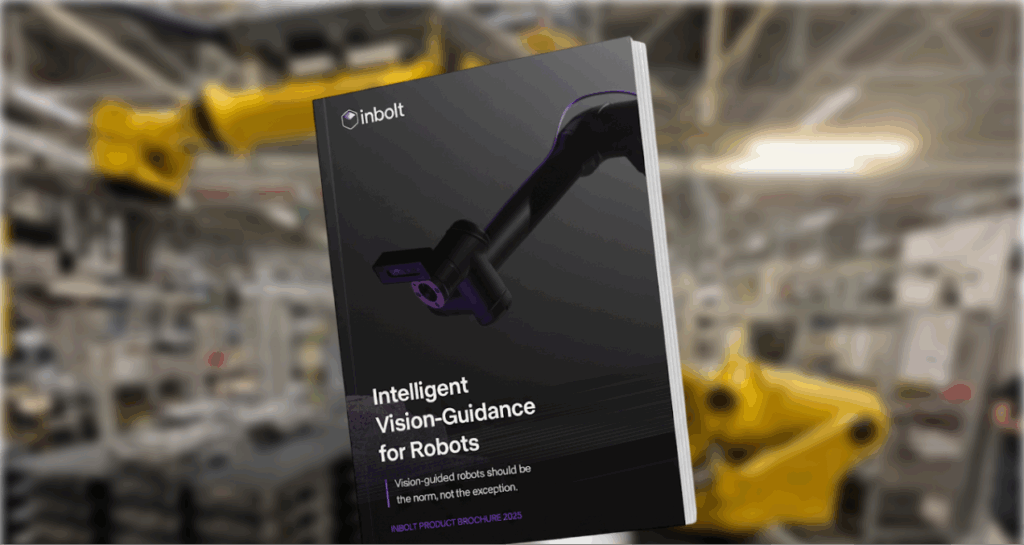
Inbolt Product Brochure
Inbolt Launches Vision-Enabled Robot Programming, Closing the Loop from CAD to Factory Floor
The New York Times: How to Make a Robot Better at Its Job? Give It Eyes.