Inbolt brings native 3D vision & intelligence to UR Gen 7
Updated: September 15, 2026
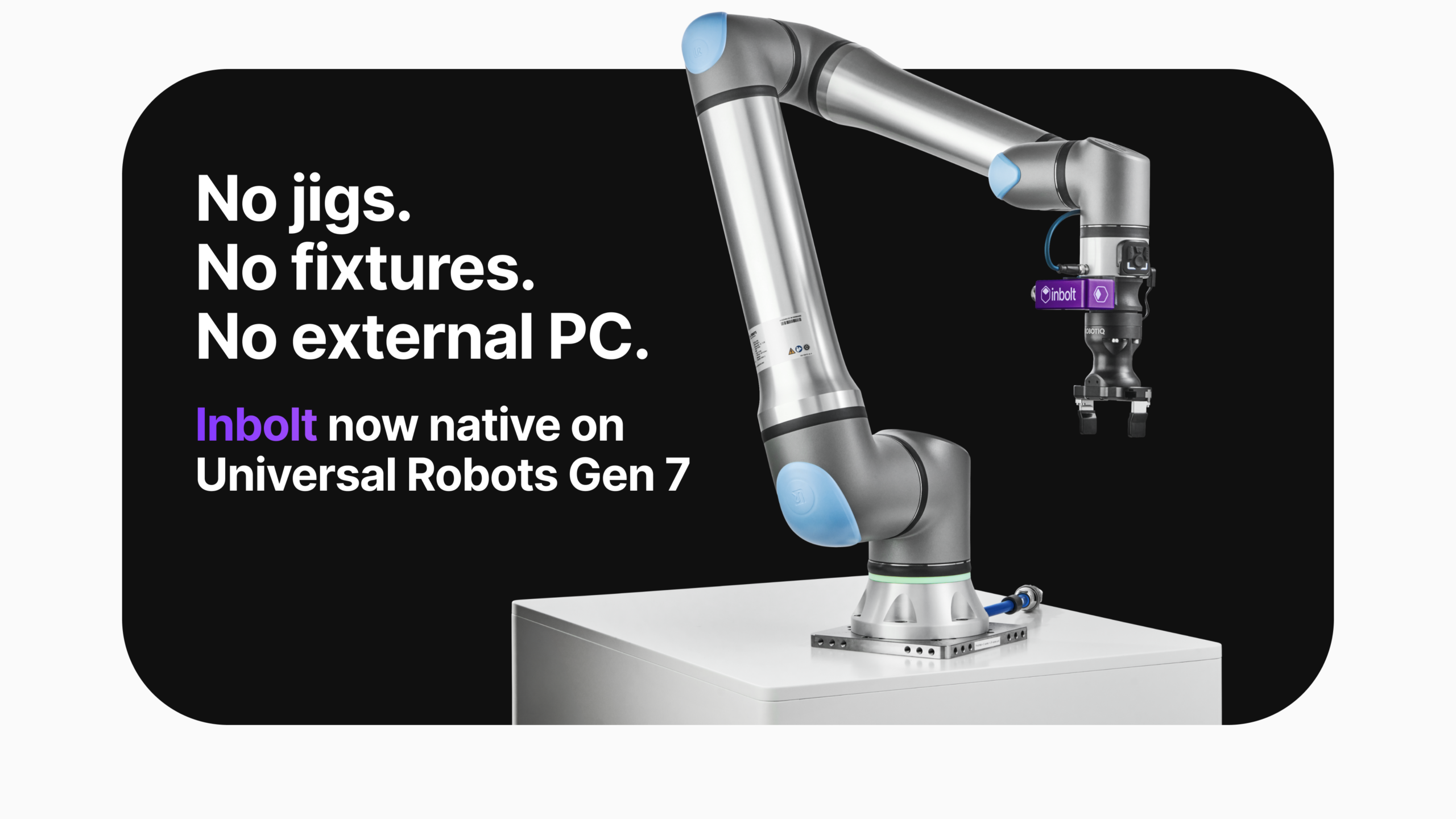
Most robotic automation cells carry a hidden cost: the jigs, fixtures and mechanical indexing that hold parts in exactly the same place so a robot can find them. That tooling is engineered per part and per station, and it stops working the moment a rack wears, dunnage shifts or an operator loads by hand.
Inbolt removes it. Our 3D vision guidance locates each part directly from its CAD file and shifts the taught robot path to match, so the cobot works from where the part actually is. Teach the path once; Inbolt finds the part every cycle.
With Gen 7, Inbolt runs directly on the UR controller with no external processor or cabling needed. Inbolt Standard is delivered as a UR+ URCap on PolyScope X, runs on the CB7 Core controller, and connects its camera through the new AI-ready tool flange. It is available now on the UR+ Marketplace.
Why do UR cobot cells still depend on jigs and fixtures?
Cobots were built to be deployed by the people who run the line, in days rather than months. Part presentation is where that promise usually stalls.
A robot following a fixed trajectory needs every part in the same position, every cycle. On a real production line, parts arrive in racks that wear, on dunnage that shifts, and from operators who load by hand. The conventional answer is to engineer the variation away: custom fixtures, indexing, and a re-tooling project each time a part reference changes. Cost and commissioning time go up, and the cell loses the flexibility it was bought for.
Adding vision has traditionally meant adding a second system: an external vision PC in the cabinet, a data cable routed down the outside of the arm, a separate interface for the team to learn, and often a vision specialist to make it work. For a cobot chosen for its ease of use, that is a step backwards.
The result is that many automation cells still rely on tooling to present parts, and vision is retrofitted after the first crash or changeover rather than specified with the arm.
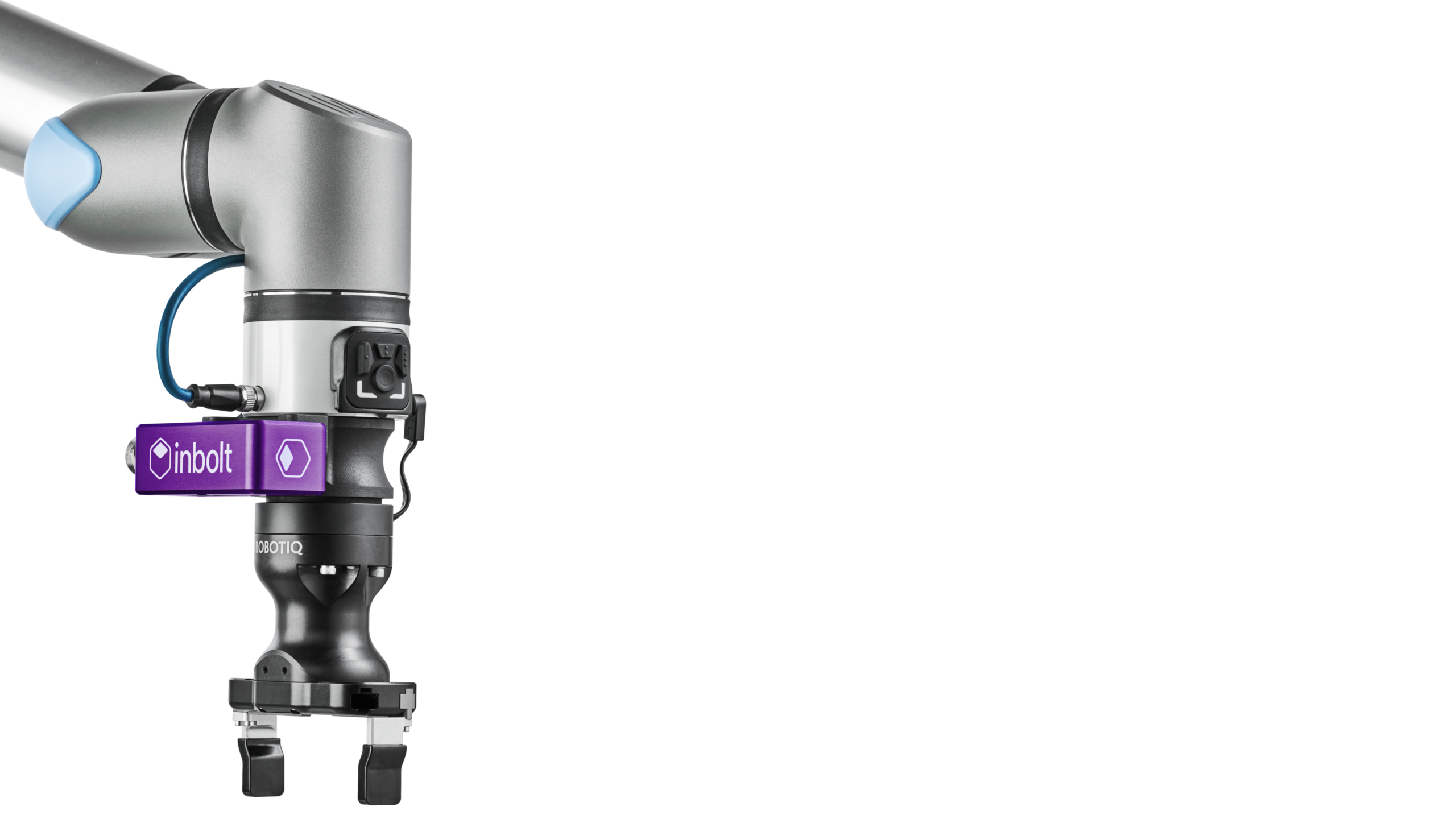
How Inbolt Standard puts native 3D vision on Universal Robots Gen 7
Inbolt Standard gives the UR cobot a robot-mounted 3D camera and a vision model trained on your parts’ CAD. Every cycle, the camera captures a 3D scene, Inbolt localizes the part in 6 degrees of freedom, and the robot path is offset to the part’s actual position. Repeatability is 0.5 to 0.7 mm on fixed parts, and the depth sensing works in bright, dim or fully dark environments.
Training takes under 10 minutes per part, directly from the CAD file. No image datasets, no labelling, no vision expertise. A single program switches between more than 80 part references, so a new part becomes a software update rather than a tooling project.
The Standard license covers stationary applications where parts arrive in a repeatable orientation, as single parts or in layers with minimal overlap: tightening and screwdriving, pick-and-place, machine tending, dispensing, de-racking and layered depalletizing.
What Gen 7 changes for vision guidance on UR cobots
Gen 7 lets Inbolt run where the robot runs. Three things make that possible.
The AI-ready tool flange. On the g-Series, the 3D camera connects through the 1 Gb Ethernet port in the flange. Camera data travels inside the arm, with no cable routed along the outside of the robot. Fewer connectors, fewer failure points, a cleaner cell.
The CB7 Core controller. Inbolt Studio and all part localization run on the controller itself, at the edge. There is no external Inbolt compute hardware, no cloud and no internet connection. Training and production data never leave the plant, which suits secure and air-gapped manufacturing networks.
PolyScope X. Inbolt commands appear directly in the UR program tree and are called like any other URScript instruction. There is no separate IDE and no workflow change. If you can program a UR, you can program a vision-guided UR.
The whole system is one camera, one URCap and one license. Nothing extra in the cabinet.
Inbolt Standard is the first of four licenses coming to Gen 7. Advanced (parts in random orientation), Bin Picking (fully random parts in bins and totes) and Dynamic (vision guidance on moving lines) follow in late 2026. All four share the same camera, the same URCap and the same CAD training workflow, so a station can start on Standard and upgrade its license as applications grow.
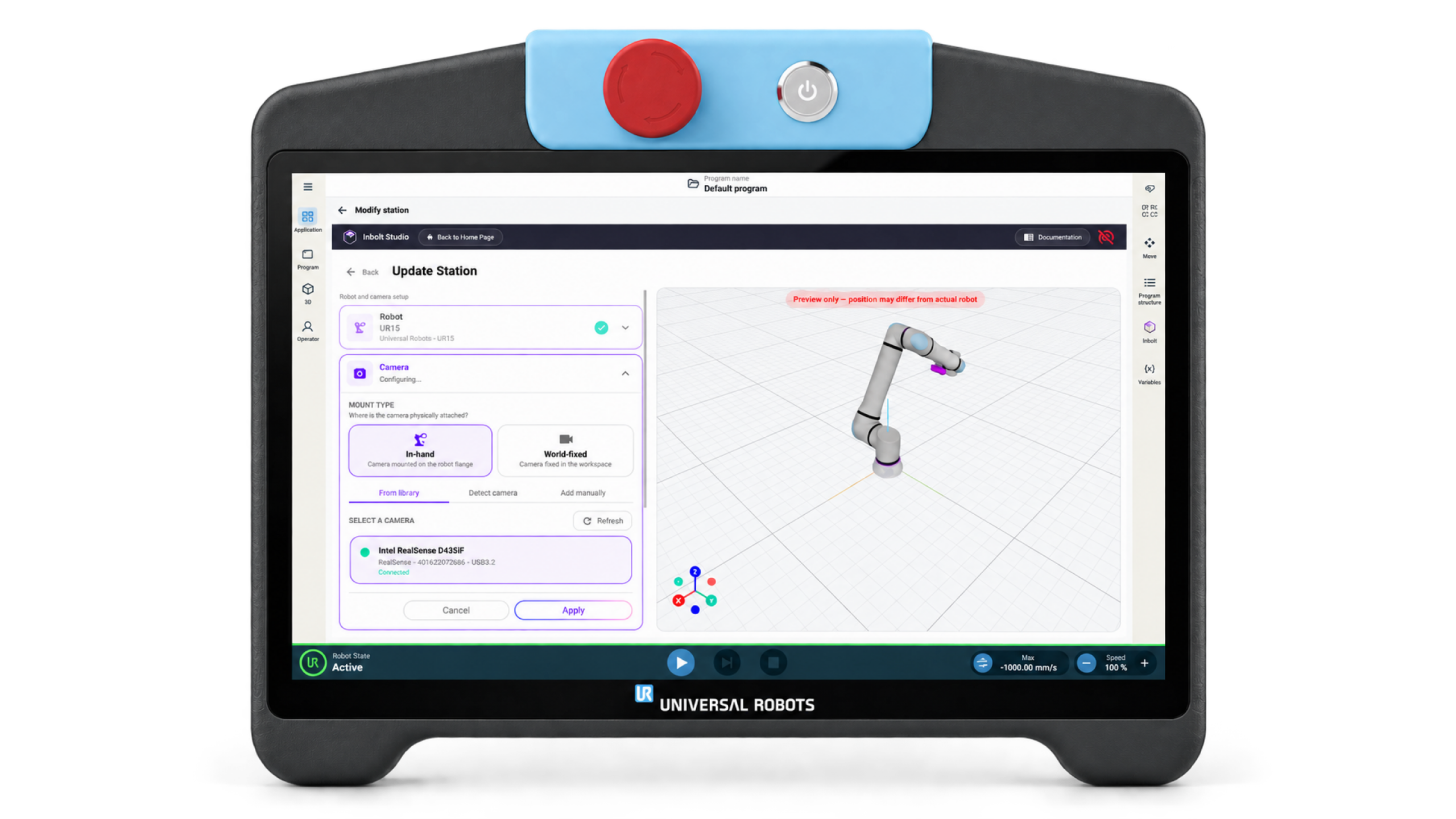
Proven in production: 12-month payback, fewer failures, faster cycles
Inbolt vision guidance is in production on more than 200 robots across 100+ factories on three continents, at manufacturers including Stellantis, Toyota, Ford, GM, Flex and Beko. Typical payback is 12 months, driven by the fixtures, indexing and re-tooling a cell no longer needs.
Results in production include a 91% reduction in tightening failures on an engine bolt run-down station, a 97% reduction in downtime on a de-racking retrofit that had been suffering daily collisions, and a 30% faster cycle time on a pick-and-place retrofit.
Because the Standard license removes the tooling engineered into every new station, the saving repeats on every cell added.
Why native matters, from Inbolt’s CEO
Gen 7 gives vision on a cobot the two things it always needed, compute in the controller and data at the flange. Inbolt Standard runs on the CB7 Core with nothing added to the cabinet, and a UR programmer builds a vision-guided station the same way they build any other UR program. That is what native means, and it is how vision guidance becomes standard equipment on a cobot rather than a specialist add-on.
Rudy Cohen
Co-founder and CEO, Inbolt
Universal Robots Gen 7
Universal Robots (UR), the original collaborative industrial robot manufacturer and part of Teradyne Robotics, introduced Gen 7, its seventh-generation robotics platform anchored by the PolyScope X robot operating system. Built for the next generation of automation, Gen 7 expands connectivity between robots, software, sensors, vision systems and end effectors, helping manufacturers deploy more capable applications with less integration effort.
Redesigned from tool flange to controller, the new Gen 7 robot platform is AI-ready by design, giving manufacturers unrivaled compute, connectivity and open architecture to deploy AI models directly on production robots without a performance trade-off.
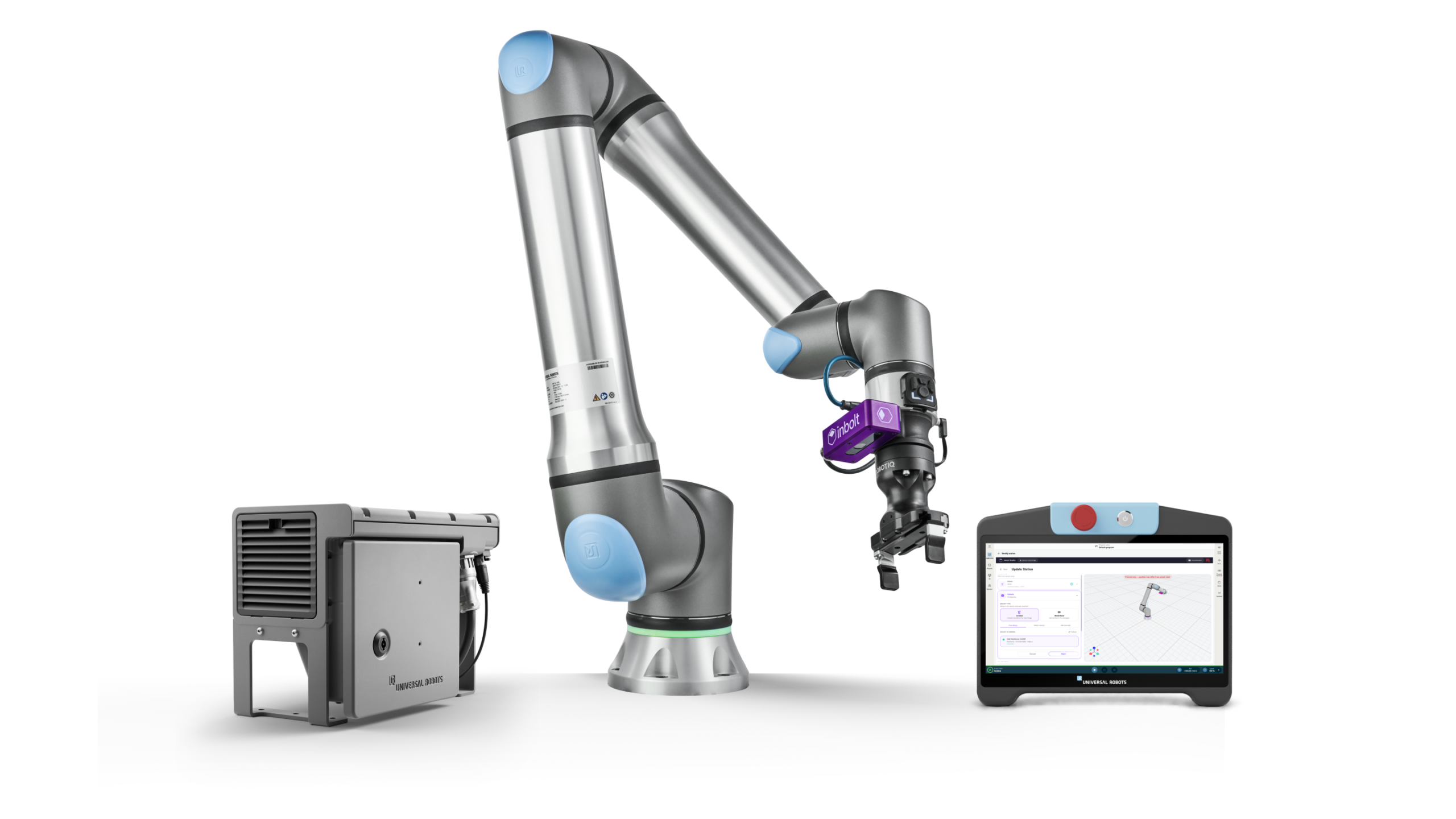
Key innovations in Gen 7
- New g-Series robot arms: UR10g-1750, UR17g-1300, and UR18g-950, joining the e-Series and UR Series lineup.
- AI-ready tool flange: Delivers data, high-power and safety directly to the tool flange, making it easier to connect cameras, sensors, grippers and other peripherals while reducing cabling complexity.
- New SP7 Smart Panel, for teaching and programming directly at the tool flange.
- CB7 Core controller: 40% more compute in a 30% smaller footprint, enabling multi-network communication with PLCs, HMIs, MES platforms, IPCs, and vision systems while reducing the need for external switches.
- PolyScope X software platform: Brings modern programming tools with open APIs for building and deploying edge-AI applications using IPCs and external AI processing, along with ISO 10218-1:2025 safety functionality and cybersecurity compliance.
- Redesigned TP7 Core teach pendant for improved ergonomics and faster programming.
- Built-in safety and cybersecurity: All g-Series robots are TÜV certified to ISO 10218-1 and UL1740, while Teradyne Robotics is certified to IEC 62443-4-1 ML3 for secure software development practices
Ecosystem
Gen 7 is backed by the UR+ ecosystem, a curated, rigorously tested portfolio of automation products, each validated by UR before reaching market.
What our partners are doing is exactly the kind of proof point that demonstrates the formative power of UR´s open platform and quality ecosystem. They are taking advantage of the advanced connectivity features on our Gen 7’s platform and build on it to provide easy-to-integrate products that run on the floor today.
Susanne Nördinger
Head of Ecosystem Success EMEA, Universal Robots
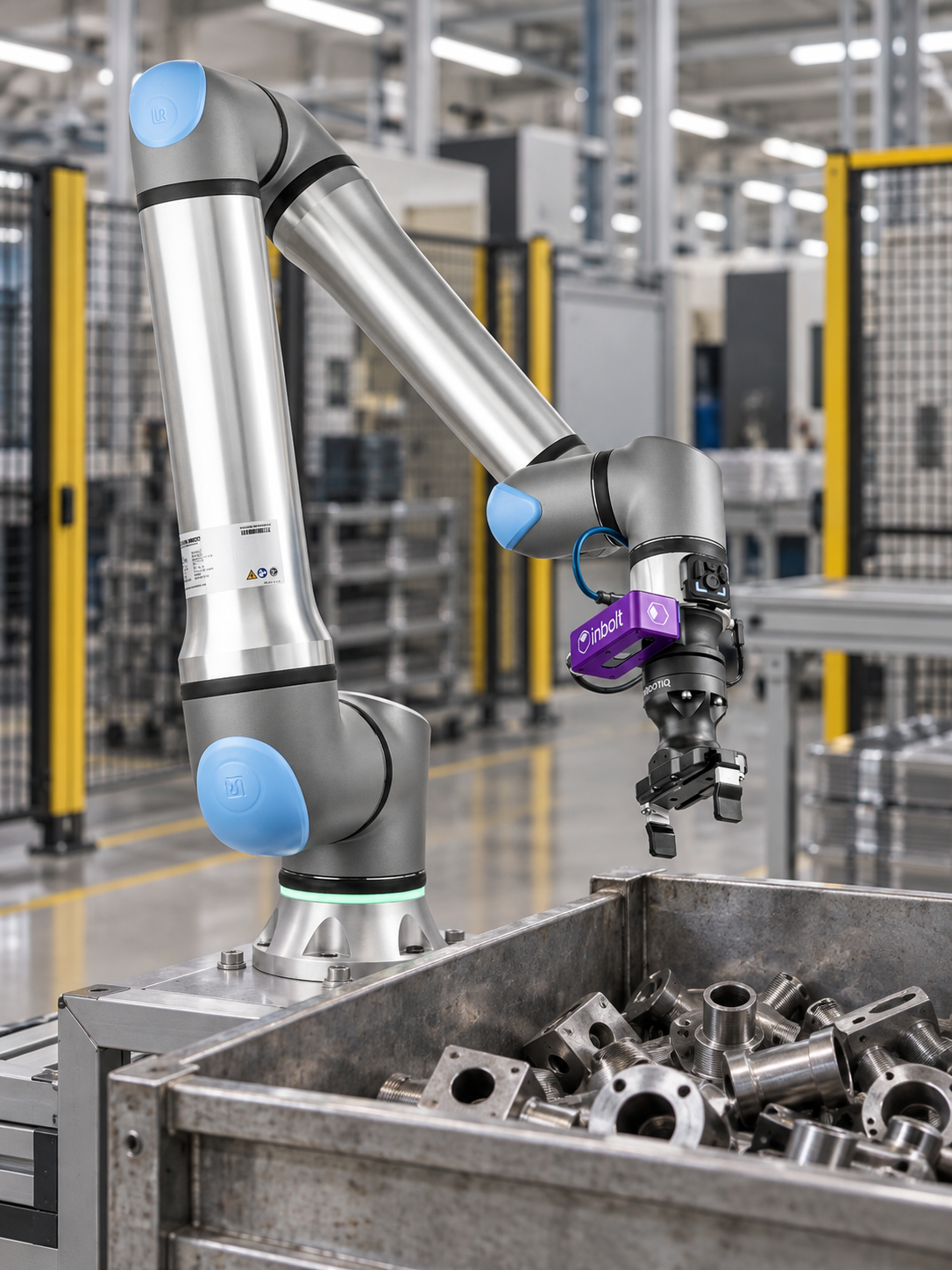
What native 3D vision on Gen 7 means for manufacturers
For plant managers and automation engineers, the case is a cost line that disappears. Jigs, fixtures and indexing are specified into every new cell and re-engineered at every changeover. With Inbolt on Gen 7, a 3D camera is specified with the arm and the gripper from the first purchase, and every future part change becomes a software update. CapEx per station goes down, commissioning gets shorter, and the cell keeps the flexibility a cobot was bought for.
For the UR ecosystem, it shows what the Gen 7 architecture is for: a vision system that used to require its own PC now runs inside the controller, connected through the flange, programmed in PolyScope X. That is automation any UR programmer can deploy.
Get Inbolt Standard on your UR cobot
Inbolt Standard is available now on the UR+ Marketplace. See the listing, talk to your local UR sales partner, or visit inbolt.com/universal-robots to scope your application with our team. We will help you validate your parts and get a vision-guided UR cell into production in days.
ABOUT INBOLT
Inbolt gives robots the ability to see, think, and adapt in real time. Its generalist AI model enables any robot to master any process, part, or station, helping manufacturers deploy faster, cut costs, and keep production moving. Trusted by Stellantis, Toyota, Beko, and Ford, Inbolt combines real-time 3D vision and proprietary models to deliver precise part localization and robot trajectory control, even in unstructured environments or moving lines. Trained on a CAD model in minutes and compatible with all major robot brands, Inbolt powers over 100 factories worldwide with flexible, scalable automation. For more information, visit www.inbolt.com.
ABOUT UNIVERSAL ROBOTS
Universal Robots is a global leader in collaborative industrial robots (cobots). With over 100,000 cobots sold worldwide, the company’s user-friendly platform is supported by intuitive PolyScope software, award-winning training, comprehensive services, and the world’s best cobot ecosystem, delivering innovation and choice to customers across a wide range of industries. With the most advanced robots in their class and a growing catalogue of ready-to-deploy AI applications, UR’s latest technology is built for the physical AI revolution.
Universal Robots is part of Teradyne Robotics, a division of Teradyne Inc. (NASDAQ:TER), a leading supplier of automated test equipment and advanced robotics systems. For more information, please visit www.universal-robots.com. For media enquiries, contact PR@universal-robots.com.
Explore more from Inbolt
Access similar articles, use cases, and resources to see how Inbolt drives intelligent automation worldwide.
The Stellantis story the New York Times told, and the engineering behind it
The gap between a great demo and a robot that runs in production
Oltre 106.000 robot lavorano già nelle fabbriche italiane. Quasi tutti alla cieca.
Inbolt Robot Programming: from digital twin to a running robot in five minutes
The missing execution layer
Why real-time robot control is the key to unlocking Physical AI
What bin picking really means in production: from semi-structured to unstructured environments